Articles Posted in Health and Safety Reports

HotelOpenDoorThe American Hotel & Lodging Association (AHLA) reminds us, it is all too easy for a hotel vacation or business trip to turn to tragedy. While hotel and motel security begins with the owner and management, these basic guest safety guidelines may reduce guests’ risk of becoming a victim of theft or assault:

Guest Safety Tips

  1. Don’t answer the door in a hotel or motel room without verifying who it is. If a person claims to be an employee, call the front desk and ask if someone from their staff is supposed to have access to your room and for what purpose.
  2. Keep your room key with you at all times and don’t needlessly display it in public. Should you misplace it, please notify the front desk immediately.
  3. Close the door securely whenever you are in your room and use all of the locking devices provided.
  4. Check to see that any sliding glass doors or windows and any connecting room doors are locked.
  5. Don’t invite strangers to your room.
  6. Do not draw attention to yourself by displaying large amounts of cash or expensive jewelry.
  7. Place all valuables in the in-room safe or safe deposit box.
  8. When returning to your hotel or motel late in the evening, be aware of your surroundings, stay in well-lighted areas, and use the main entrance.
  9. Take a few moments and locate the nearest exit that may be used in the event of an emergency.
  10. If you see any suspicious activity, notify the hotel operator or a staff member.

Read the full AHLA safety guidelines.

Selecting a Safe Hotel or Motel

The Murray Law Firm represents victims of hotel and motel violence and security negligence. We urge guests to look for the following security measures and access controls when selecting a hotel or motel:

  • Bright lighting in all parking areas, outdoor walkways, indoor hallways, and common areas.
  • Surveillance cameras and 24-hour security patrols.
  • Building access controls, such as an entry gate, security guard, guest card controlled entry to all buildings and common areas.
  • Hotel room access controls, such as a deadbolt lock, a door viewer, a steel frame door, window locks, and a security bar for any sliding patio doors.
  • Call the local police department if you’d like to check on crime reports for a particular property.

Hotel and motel owners and managers are required by law to provide a safe premises for all guests legally on their property and to prevent foreseeable third-party criminal attacks, such as rapes, shootings, assaults, or robberies. For example, should a proprietor have reason to anticipate a criminal act based on knowledge of a security lapse or a previous crime on or near property, he or she then has a duty to exercise ordinary care to deter such crime and protect those legally on their premises from harm.

We Fight for Victims of Hotel and Motel Security Negligence…Contact us Now for a Free Consultation.

The Murray Law Firm has recovered millions of dollars for victims of hotel violence and security negligence, and we offer our legal assistance if desired.  We represent our Clients on a contingency agreement, which generally means that no fees or payments are owed until and unless we recover. Anyone seeking further information or legal representation is encouraged to contact us via e-mail (click here) or by telephone at 888.842.1616. Consultations are free and confidential.

728x90 Justice

Screen Shot 2015-08-21 at 2.41.11 PMMost mall-related crime occurs in parking lots, making shoppers and drivers navigating these lots vulnerable to theft, assault and vehicle break-ins. Law enforcement officials who patrol the country’s busiest malls have coordinated with Consumer Reports to help shoppers across the country reduce their risk of becoming victims. Their advice appeared in the December 2013 issue of Consumer Reports Magazine:

Be Choosy Where You Park

Sure, that isn’t always easy. But it could be worth driving around a little to find a spot in a populated area instead of settling on one in a dark, remote location, especially if you are alone. “Park in a well-lit area because criminals hate light; they don’t want to be identified,” said Officer Heidi Miller of the Police Department in Bloomington, Minn., home of the Mall of America.

Lock and Stow

Many parking-lot thefts occur because drivers neglect to perform the simplest task: locking the car and closing the windows. Don’t allow your car to be an easy target for thieves. Hide valuables such as GPS devices, cell phones, laptops, and ­iPods. If your GPS is mounted to your windshield, pull it off and try to clean off the suction marks so that thieves don’t break into the car looking for it. “Don’t even leave the GPS cable,” Miller said, because criminals think you’re simply putting the device away in your glove box or center console. In addition, if you have an aftermarket stereo with a removable faceplate, Miller suggests removing the face and taking it with you.

Stay Focused

“People walking through the parking lot don’t pay as much attention as they used to,” Capt. Robert Guidetti of the Paramus, N.J., Police Department said. Instead they are checking e-mail or making calls. Look to your front, side, and rear when walking to and from a store. Being aware of your surroundings lessens your chances of becoming a victim or getting struck by a car, Guidetti says.

Assume You’re Watched

Criminals watch for shoppers who put purchases in their car or trunk, then walk back into the store. Once you’re gone, it can take only moments to break in and grab items. If you need to stow packages while shopping, repark your car in a different location, away from anyone who could have been observing, says Detective Bob Welsome of the New York City Police Department. Other options are to find out whether the mall has storage lockers available or ask security to hold your packages until you’re ready to leave.

Don’t Dally

“Walk like you have a purpose,” said Officer Harry Nuskey of the Upper Merion Township, Pa., Police Department, near the popular Mall of Prussia. “Don’t wander, even if you don’t know where your car is.” Have your car key in hand before you leave the store. It can also act as a weapon if necessary, Guidetti says. Once in your car, lock the doors immediately and drive off. Don’t sit and do other things. That will lessen the chance of you becoming a target.

Beware of Stranger Danger

If you are approached or chased, yell or scream to get attention or go back to the store and alert security. If you are followed while driving, go to an open gas station or a populated area with plenty of light, Miller says. “Your best defense is a well-charged cell phone,” Miller said. “Get on the phone and call 911.”

Please visit Consumer Reports for the complete article.

Parking lot owners and managers are required by law to provide a safe premises for all patrons legally on their property and to prevent foreseeable third-party criminal attacks, such as rapes, shootings, assaults, or robberies. For example, should a proprietor have reason to anticipate a criminal act based on knowledge of a security lapse or a previous crime on or near property, he or she then has a duty to exercise ordinary care to deter such crime and protect those legally on their premises from harm.

We Fight for Victims of Parking Lot Security Negligence…Contact us Now for a Free Consultation.

The Murray Law Firm has recovered millions of dollars for victims of parking lot violence and security negligence, and we offer our legal assistance if desired.  We represent our Clients on a contingency agreement, which generally means that no fees or payments are owed until and unless we recover. Anyone seeking further information or legal representation is encouraged to contact us via e-mail (click here) or by telephone at 888.842.1616. Consultations are free and confidential.
728x90 Justice


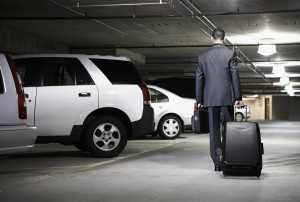
200389576-001While a place we visit daily may not feel dangerous, many workplace parking lots leave employees vulnerable to theft, assault or vehicle break-ins. The parking lot design, location, security measures, and hours of operation can present or deter the risk of workplace violence.

The Canadian Centre for Occupational Health and Safety (CCOHS) has compiled a list of safety guidelines to help employees protect themselves and reduce their risk of becoming victims of parking lot violence:

General Employee Parking Lot Do’s and Dont’s

Always:

  • Park near your building in a highly visible and well-lit area.
  • Park near the parking attendant or a well-lit exit.
  • Use the main building entrance — avoid secluded exits.
  • Keep your valuables, including purses and recent purchases, out of sight.
  • Lock the doors and roll up windows once you are in the vehicle.
  • Have a plan ahead of time. Know where you can go for safety and how to call for help.

Never:

  • Do not park next to large vehicles as they will block your sight.
  • Do not have a personal identification tag on your key ring.
  • Do not approach someone loitering near your vehicle. Walk to a safe place such as a lighted store, house or building. Call the police.

Workplace Parking After-Dark or in High-Risk Neighborhoods

Always:

  • Try to walk with a friend, co-worker or security officer. Give your escort a ride back to the main entrance so they do not have to walk back alone.
  • If you have to walk alone:
    • Have a co-worker watch you from a window.
    • Wave to them on the way to your vehicle.
    • Wave even if no one is watching to give the illusion that someone is watching you.
    • Stay on well-lit streets and in the center of the sidewalk. Stay away from hiding spots, such as bushes, doorways, alleys and parked cars. Cross the road if necessary.
  • Be alert to your surroundings. Walk with confidence. Keep your head up and look around.

Never:

  • Do not dig in your purse or bag.
  • Do not wear headphones, use a cellphone or other distraction.
  • Do not carry heavy briefcases or bags that may get in the way.

Approaching Your Vehicle

  • Be prepared when you leave your business or when leaving your car for work. Have ready:
    • Your keys to unlock the vehicle.
    • Your keys or cardkey to unlock the building doors.
    • A whistle or other personal alarm.
  • As you approach your car, look around, inside and even glance underneath for people who may be present. If you are suspicious, walk away. Go to a safe place and call for help.
  • Report suspicious behavior to the parking lot attendant, security or police.

See complete workplace parking lot safety guidelines at CCOHS.

Parking lot owners and managers are required by law to provide a safe premises for all patrons legally on their property and to prevent foreseeable third-party criminal attacks, such as rapes, shootings, assaults, or robberies. For example, should a proprietor have reason to anticipate a criminal act based on knowledge of a security lapse or a previous crime on or near property, he or she then has a duty to exercise ordinary care to deter such crime and protect those legally on their premises from harm.

We’ve Recovered Millions for Victims of Parking Lot Security Negligence…Contact us Now for a Free Consultation.

The Murray Law Firm has extensive and successful experience in representing victims of parking lot security negligence.  We offer our legal assistance, if desired.  We represent our Clients on a contingency agreement, which generally means that no fees or payments are owed until and unless we recover.  Anyone seeking further information or legal representation is encouraged to contact us via e-mail (click here) or by telephone at 888.842.1616. Consultations are free and confidential.

728x90 Justice